Friday, December 28, 2012

Friday's Newsflash - Win A Trip to Sabah Worth RM 4,000

Happy Friday, everyone!

Today is the last Friday for the year and to end the Friday’s Newsflash series for 2012, here's a good news for those of you wanting to win a free trip.

Sabah Tourism Board, in collaboration with Time Out KL, is having a contest where 2 lucky winners will receive all expenses paid trip to Sabah. All you have to do is just to answer 2 simple questions and name the attractions of Sabah in the pictures. Clues and hints are given to make it so much easier.

To join the contest, click on this Time Out KL link. The closing date for the contest is 31 January 2013. For more information regarding Sabah (or to find out the names of the places in the pictures), you can go to the official website of Sabah Tourism Board.

See you in 2013!

Wednesday, December 26, 2012

My Son Sanctuary - An UNESCO Heritage Site

Since I was already here in central Vietnam, why not explore other places within close vicinity? I have every intention of going to My Son Sanctuary during my stay in Hoi An. Located about 40 to 50 km away from the quaint town, there are many ways for you to go from one UNESCO Heritage Site to another UNESCO Heritage Site and I chose one of the least common mode of transportation: cycling.

Mi Quang for breakfast to fuel my day

The idiotic and egoistic side of me thought that 40-50 km was a manageable distance, and I did reach the temple ruins, with times and my body being the only casualties. I cycled for almost 4 hours to reach my destination and my legs were sore, to say the least. Imagine my horror when I realized I have to do another 4 hours of cycling to go back to Hoi An. (I 'hitchhiked' back to Hoi An with a Malaysian couple in their rented van. Their driver was not very friendly to me.) I now understood why the owner of the hotel gave me a smile when I said I wanted to cycle from Hoi An to My Son.

Beautiful paddy field while cycling

This is NOT the sign you want to see for it means you're lost

Even though it was a strenuous work, I have no regret in doing so (at least when I finally reached the location. I had tempted to turn back to Hoi An throughout the journey). This cycling expedition was an eye-opening to the kind-hearted and friendly peoples of Vietnam.

It's not that unusual to have the whole road to yourself

The Vietnamese were very willing in helping me whenever I got lost or detoured on my way heading there. Even though there was language barrier, we managed to understand each other perfectly well, with a lot of hand gestures and body languages. Asking for direction with all sorts of hand movements can be fun and entertaining.

Thanks to the locals, I was getting nearer

As for the reason of this adventure of mine, the temples in My Son Sanctuary were built by the Cham people for religious and spiritual purposes. Hindu influences were significant in its architectural designs and most of the temples were dedicated to Hindu deities. However, after the end of the Champa kingdom, most of these structures were reclaimed by the jungle and left unattended. Wars during the tiring times were of no help with damages being done on these temples.

The designation of the UNESCO Heritage Site title to the ancient ruins of My Son introduced the world to these temples. While not as magnificent in term of magnitude and scales when compared to other ancient ruins in the region such as Angkor Wat in Cambodia, the Bagan Archaeological Zone in Myanmar, Borobudur in Indonesia, et cetera, it worth making a day trip to the site if you happened to be in Danang or Hoi An. Here's the pictures of My Son Sanctuary.


Some of the temples are in better shape

Some artifacts inside one of the ancient temples on display

Not all ruins are in good conditions...


Definitely worth a visit when you are in central Vietnam.

*TO BE CONTINUED*

Sharing is caring. A word of advice and a piece of information.

As My Son Sanctuary is about 40 to 50 km away from Hoi An, you can follow bus tour to the ruins. Most hotels offer bus trips to the site and if they do not have it, they can help arrange one for you. For the more adventurous one, you can consider renting a motorbike and ride to the sanctuary. For the extreme, do what I did and cycle your ways to My Son. As for the entrance fee to the site, it is VND 60,000 (about RM 9.60).

Thursday, December 20, 2012

Myanmar - Overview

My last trip before the end of 2012 was to Myanmar. It was the only remaining country in Southeast Asia that I have yet to explore or about to explore and when I saw the BIG points redemption from AirAsia, I thought, why not? In a snap, I secured a return ticket to Yangon, Myanmar with just 20 BIG points.

Old colonial buildings are aplenty in Yangon

However, as the days went by and the date got closer, I have this fear inside me that started growing. It was not like this is my first time travelling alone. I did that for the first time for my Vietnam trip this July and also to Brunei just last month. It was the notorious reputation the country had built for itself, what with the lack of human rights and the strict militant government.

Typical street of Yangon

Upon landing, I found my fear to be rather baseless for my 5 day trip was filled with nothing but memories of kindred hearts and friendly faces of the Burmese. They were willing to go on extra length to help you out, making you feel as welcome as possible in their homeland.

Beautiful Burmese boy

I realized I truly enjoyed Myanmar a lot. While I did not spend much time in the country’s largest city, Yangon, as I had originally planned, I did pretty much what I set out in the first place and more. The main attraction to me for the trip was Bagan and true enough, everything in that town was exciting and enchanting to me. A must do while in Bagan? Sunrise and sunset. Breath taking!

What you can expect to see in Bagan

Imagine sunrise and sunset as background to this image!

As to how come I did not explore Yangon as much as I wanted to, it was rather a spontaneous thing that I did. I ended up following a fellow traveler to Inle Lake as I heard nothing but beautiful praises. To be frank, I have no idea where is the lake or what there is to do or see, but, since I was already there, I thought, what the hell? Well, I did not regret heading to Inle Lake, to say the least.

Inle Lake

Fishermen still make a living through the lake

All in all, it was another mind-opening trip for me. More of Myanmar will come, sometimes next year, I think. Stay tune.

*TO BE CONTINUED*

Sharing is caring. A word of advice and a piece of information.

Entering Myanmar requires either tourist visa or business visa, depending on the nature of your visit. In order to apply for the tourist visa, you have to provide a photocopy of your passport with at least six months of validity, two recent passport sized photos with white background, a fully filled form which can be obtained at the Embassy of the Union of Myanmar in your country or country nearest to you, and US$30. The tourist visa is valid for a period of 90 days and for a single entry of maximum 30 days only. There are no exemption for visa, even the ASEAN countries. For more information, you should contact the embassy in your country.

Wednesday, December 12, 2012

Last Trip of the Year

2012 is coming to an end and I intend to go out with a bang!

Not satisfied with my Brunei trip, I decided to go for another vacation, this time, crossing another country off my Southeast Asia list. I guess my resolution to cover all the ASEAN countries (excluding Timor Leste which is still off limit for me at the moment) will come true comes July next year.

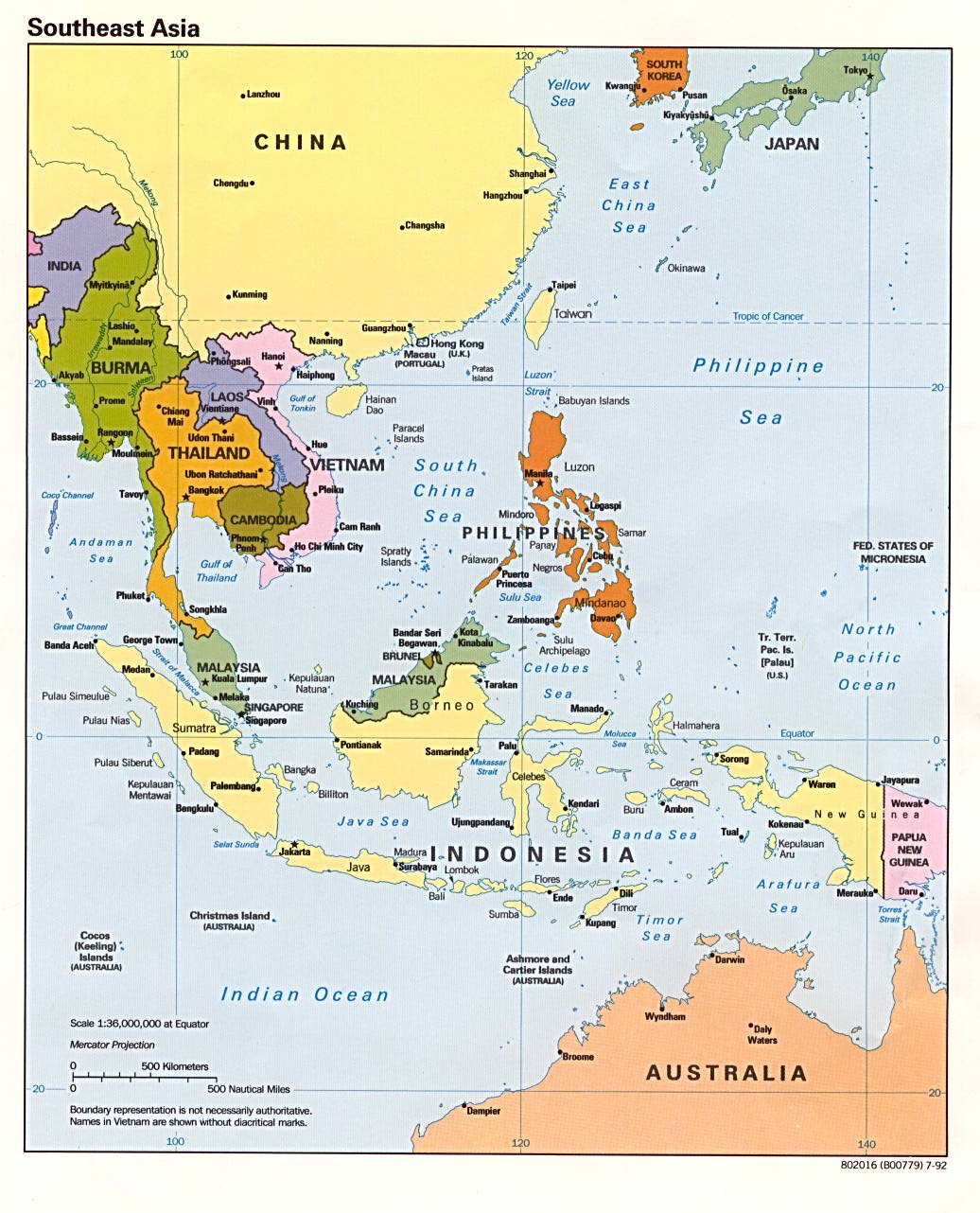
I will be flying this Friday for a 5 day holiday, coming back next Tuesday morning. Can you guess which country I'm going to? Here's a hint, it's a country that I have yet to visit before.

Map of Southeast Asia

See you soon!

p/s I guess I won't be able to finish off my Vietnam trip before year end as I hope. Well, I tried and that's the only thing that matter, right? I'll continue after I'm back from my trip.

Monday, December 10, 2012

Hoi An - Japanese Covered Bridge

The last of the attractions that I had visited in Hoi An is the Japanese Covered Bridge. Probably the most famous landmark in Hoi An, the Japanese Covered Bridge or Chua Cau is the must visit when you are in this UNESCO World Heritage Site. A visit to this ancient town is not complete if Chua Cau is not part of the itinerary.

The Japanese Covered Bridge, early in the day where tourists are still sleeping

Originally built in the 17th century by the Japanese community in the port centre to serve as a link to the Chinese quarter in the town, the bridge now attracts uncountable number of tourists to Hoi An. Besides being a bridge, its inside serves as a temple dedicated to the God of Weather. Back then, sailors would pray to the god, asking for calm sea during their sails.  

Altar to pay respect

A Vietnamese guide giving explanation of the bridge

A friendly Vietnamese woman

There is one mythical story associated with the bridge. According to legend, the bridge was built as a form of controlling the 'mamazu' dragon monster, whose head was believed to be in India and its tail in Japan. The legend goes that the movements of the creature's tail caused earthquakes in Japan and since Vietnam was on the back of the 'mamazu', the bridge was built to pin it down, preventing earthquakes in the country.

The architecture of the bridge is a good example of the Japanese design of the period. Over the years, the design of the bridge remains relatively faithful to the original style. You will notice that there is a statue of a dog and a monkey, each at one side of the entrance, to mark the initiation (year of the dog) and the completion (year of the monkey) of the construction of Chua Cua.

Arch entrance

Statue of the dog

Statue of the monkey

The Japanese Covered Bridge is not to be missed.

Chua Cua by night
*TO BE CONTINUED*

Friday, December 7, 2012

Hoi An - Hoi An Handicraft Workshop & Hokien Meeting Hall

Let's continue with the attractions in Hoi An that I've been to.

Hoi An Handicraft Workshop

This is a must go attraction in my opinion. However, you have to be there at specific time if you want to catch traditional performances staged for tourists to watch. According to the Wikitravel website, there are two daily performances at 10.15 am and 3.15 pm, except on Monday itself. It was the afternoon show that I happened to stumble upon.


Traditional dances

If my memories served me right, there were five performances in total. The first is the traditional instrument performance, followed by four song and dance segments of various ethnic tribes around Vietnam. All the performances are unique and entertaining, no doubt about that.


While the front hall of the house was used as the stage of the show, the back section is the place where handicrafts are showcased and hopefully, being bought by tourists. If you proceed to the first floor, you get to have a glimpse of talented artists stitching photos onto a piece of cloth. They are transferring the photos into a work of cross stitch and the results are gorgeous, almost the exact replica of the photos.


Lanterns, being Hoi An's signature look, are aplenty there

Talented cross-stitch artist bringing pictures to life...

...in cloth

Hoi An Handicraft Workshop is a must visit attraction in this UNESCO Heritage Site.

Hokien (Fujian) Meeting Hall

This meeting hall is quite popular among the tourists and it is understandable to see why. I have to admit, I have no idea what's the function of this communal hall. Is it like Khoo Kongsi back in George Town, Penang, a clan house? Or is it as its name suggested, a meeting hall? Even when inside the compound, I still have no idea which category this Hokien Meeting Hall fits into.  


Look at the Japanese tourists, mesmerized by its beauty

Regardless of that, I still find this assembly house very interesting, with beautiful architectures to boost about. Its famous facade is the usual pop up image when searching for the communal hall through the Internet. Here's some pictures of Hokien Meeting Hall.


The beautiful facade

Water fountain

Temple within the assembly hall

One of the exhibitions...
*TO BE CONTINUED*

Wednesday, December 5, 2012

Hoi An - Cao Lau

My most memorable dish throughout my Vietnam trip, besides the bowl-licking bun mam whipped out by The Lunch Lady in Ho Chi Minh City, is the signature noodle dish of Hoi An, cao lau.

Thick, flavourful broth, served with slices of roasted porks and dough fritters, handful of fresh herbs and vegetable covering the top of the bowl, it is such a typical Vietnamese cuisine, yet so delicious and famous in this ancient town.

Outside of the central market

My first taste of this delight was on my first day in Hoi An. I was in the central market, looking for potential stall to have my first cao lau. You'll notice almost every stall in the market have it as their own signature dishes, making it very hard to choose which to patron. In the end, I left it to faith to help me decide.

The stall I ended up having my first cao lau

And faith treated me well. It was so good that I wished I have a second helping, if not for my bloated stomach.

A must-try in Hoi An

On my last day in the town, I have another bowl of cao lau, at one of the stalls by the river bank, overlooking the scenic river view. While not as tantalizing as the first bowl, it compensates with beautiful views by the river.

Cao lau = VND 25,000 (about RM 4.00)
Non halal

*TO BE CONTINUED*

Sharing is caring. A word of advice and a piece of information.

You can read more about cao lau and how it is prepared here, an article by Robyn Eckhardt, author of the EatingAsia website.

Monday, December 3, 2012

Hoi An - Museum of Trade Ceramics & Tan Ky House

OK, back to my Hoi An story. Now that you what are the main attractions in Hoi An Ancient Town, here's some brief info on the one that I had visited during my stay there.

Museum of Trade Ceramics

The first attraction I visited was the Museum of Trade Ceramics. Located along the Tran Phu Street, this museum traces the origin and history of Hoi An and its function as a trade port back in the old days. 


Museum of Trade Ceramics

Many ceramic plates and vases, most of which are in fragments, of various origin points such as China and Japan, can be found on display here in the museum, reinforcing the importance of this quaint town as a trade centre back then.


Some of the ceramics on display

Model of trading ship back then

While the displays here are solid works to support Hoi An’s claim as a vibrant city in the 13th through the 17th centuries, the real deal of the museum is the building itself. This house was one of the six houses picked by the professionals for the Hoi An Town Preservation Cooperation Project to protect and restore the town’s valuable built heritage.   


Engraving inside the house

Besides the ceramics on display, you can also read about the process of the restoration works done to preserve the house. Of all the six houses chosen, only this house was altered its original function to become the museum. The rest remained as residences or shops.


The original roof tiles and pillars, replaced in the restoration

Tan Ky House

Generations of family have been residing in this Old House of Tan Ky, including the current one. Upon entering the front of the house, one of the family members will greet you with a cup of tea and ask whether you would like a tour of the house. History of the family as well as the house will be shared by the said family member to you, giving off a closer connection to it.


The living room of Tan Ky House

Tan Ky House is a blend of three distinctive architectural styles - Chinese, Japanese and Vietnamese – making this old house unique of its own. Serving both a family house and merchant shop, the front part of the building is for meeting with travelling merchants while the back and the second floor of the house are for own uses.


The bedroom

The tour of the house is restricted to only the front area, the living room and the courtyard. While you can roam freely around the house, you will feel like intruding their lives for some of the elders are resting inside the house.

Another wall engraving, this time in the Tan Ky Old House

Not much photos were taken when in the old house. I don't feel welcomed, to be honest, nor I felt right to take photos of other people' houses.

*TO BE CONTINUED*